
Thermoset injection molding has become one of the most essential processes in advanced manufacturing, especially in industries that require components with exceptional heat resistance, dimensional stability, electrical insulation, and long-term mechanical strength. While thermoplastic materials dominate many consumer and industrial products, thermoset plastics offer engineering characteristics that thermoplastics cannot match.
Their unique cross-linking chemical reaction, permanent three-dimensional molecular network, and ability to maintain performance under extreme conditions make thermosets indispensable across automotive, aerospace, electronics, energy, and heavy-duty industrial applications.
This whitepaper provides a full, technically grounded overview of thermoset injection molding, covering the molding process, materials, applications, tooling, advantages over thermoplastic injection molding, and manufacturing considerations.
It integrates a broad range of thermoset-related terms—such as bulk molding compound (BMC), phenolic molding, epoxy thermoset molding, melamine molding compounds, thermoset component manufacturing, high-temperature thermoset plastics, and glass-fiber reinforced thermosets—to create a complete reference for engineers, buyers, and OEMs.
Understanding Thermoset Injection Molding
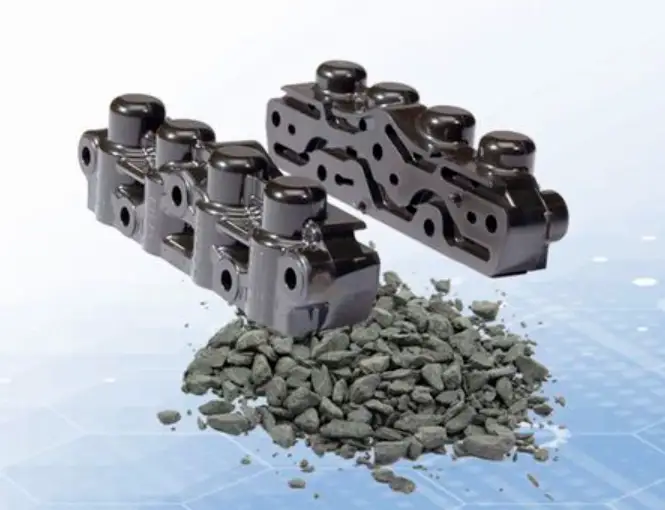
Thermoset injection molding is a molding process in which a thermoset material or thermoset plastic compound is injected into a heated mold, where it undergoes an irreversible chemical reaction (cross-linking) that transforms it from a viscous resin into a hardened, permanently set plastic part. Once cured, it cannot melt again—unlike thermoplastic injection molding, where the plastic can be reheated and reformed.
What Is a Thermoset?
A thermoset (or thermosetting plastic) is a polymer that cures permanently through heat, pressure, or chemical catalysts. Key properties include:
- High heat resistance
- Dimensional stability
- Excellent electrical insulation
- Strong chemical and solvent resistance
- Hard, rigid structure
- Permanent cross-linked molecular network
Common thermosetting materials include:
- Phenolic resins
- Epoxy resins
- Melamine molding compounds
- Bulk molding compound (BMC)
- Sheet molding compound (SMC)
- High-temperature thermoset plastics
- Glass-fiber reinforced thermosets
These materials are engineered for high-performance applications where failure under load or heat is not acceptable.
Thermoset vs Thermoplastic: Critical Differences
Understanding the difference between thermoset and thermoplastic materials is essential when selecting the correct manufacturing process.
Thermoplastics:
- Melt when heated
- Can be re-melted and reshaped
- Used in standard injection molding
- Commonly softer and more flexible
- Shorter molding cycles
- More recycling potential
Thermosets:
- Cure permanently; cannot be remelted
- Exhibit superior heat resistance
- Maintain tighter tolerances under stress
- Higher-dimensional stability
- Ideal for electrical insulation, high-temperature, and structural components
- Often stronger than thermoplastics
- Longer curing cycle in molding
Thermoset injection molded parts are preferred for applications requiring:
- High heat performance
- Electrical insulation properties
- Chemical resistance
- Long-term dimensional stability
- High strength under load
- Fire or flame resistance
Thus, thermoset plastic injection plays a role where thermoplastic molding cannot provide the required durability or stability.
The Thermoset Injection Molding Process
Although thermoset injection molding shares core principles with thermoplastic injection molding, its technical approach, tooling, and process parameters differ fundamentally. The process uses heated molds, specialized injection machines, and thermosetting materials that harden chemically inside the cavity.
Materials Used in Thermoset Injection Molding
Thermoset injection molding uses highly engineered thermoset molding materials, including:
- Phenolic molding compounds
- Melamine molding compounds
- Epoxy thermoset molding materials
- Bulk molding compound (BMC)
- Sheet molding compound (SMC)
- Glass-fiber reinforced thermosets
- High-temperature thermoset plastics
- Heat-cured plastic components
- Cross-linked polymer molding compounds
BMC is one of the most widely used because it combinesresins, fillers, fibers, and additives into a precise moldable compound.

Process Steps: How Thermoset Molding Works
Step 1 — Material Preparation
The material—often a molding compound, BMC, or resin mixture—is prepared and fed into the machine.
Unlike thermoplastics, many thermosets start as pastes, powders, or semi-solid compounds.
Step 2 — Injection Into a Heated Mold
A specialized injection press pushes the material into a hot mold.
The temperature is intentionally high to trigger the chemical reaction.
Step 3 — Cross-Linking and Curing
Inside the mold:
- Material is heated
- Cross-linking bonds form
- The part becomes hard and chemically stable
- It permanently cures
This is the core difference between thermoset and thermoplastic molding.
Step 4 — Cooling and Ejection
After sufficient curing time, the part is ejected.
Cooling time is shorter because the mold is already hot.
Step 5 — Post-Processing (If Needed)
Some insert molding, assembly, or minor finishing steps may follow.
This complete cycle defines the thermoset injection molding process, producing high-strength, durable, heat-resistant molded parts.
Thermoset Injection Molding Equipment and Tooling
Because thermosetting plastics behave differently from thermoplastics, the equipment and tooling used are specialized.
Thermoset Injection Molding Machines
Thermoset injection machines differ in:
- Lower barrel temperatures (to avoid premature curing)
- Higher mold temperatures
- Special screw and plunger designs
- Precision injection pressure control
- Ability to handle highly viscous materials
These thermoset injection machines support:
- BMC molding
- Phenolic injection molding
- Epoxy resin molding
- Heat-cured molding plastics
Tooling for Thermoset Molding
A reliable injection mold for thermoset plastics must be:
- Designed for high temperature
- Made with high-strength materials
- Resistant to wear
- Optimized for cross-linking cycles
- Equipped with temperature control
- Capable of maintaining tight tolerances
Thermoset mold design is more complex than thermoplastic mold design because:
- The mold is heated, not cooled.
- The tool must accommodate chemical reaction shrinkage.
- The material behaves differently under pressure and flow.
This is why many molding companies rely on specialists with deep experience in:
- Thermoset tooling and molds
- Thermoset component manufacturing
- Thermoset curing cycles
- Dimensional stability molding
Material Behavior: Why Thermosets Cannot Be Remelted
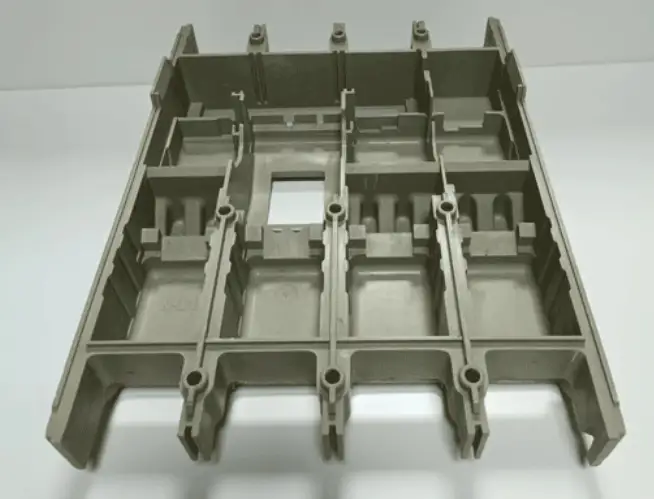
The defining characteristic of thermosets is cross-linking.
Once the material cures, it forms a rigid three-dimensional network of bonds.
Thermoset Chemical Reaction:
- Irreversible
- Permanent
- Heat-activated
- Creates a structure “stronger than thermoplastic.”
This makes them ideal for extreme environments but unsuitable for remelting.
Advantages of Thermoset Injection Molding
Thermoset injection molding provides engineering benefits unmatched by thermoplastics.
Heat Resistance
Thermosets maintain structural integrity at high temperatures, making them ideal for:
- Under-the-hood automotive components
- Electrical enclosures
- Aerospace thermoset components
- High-heat industrial equipment
Dimensional Stability
Thermoset molded parts hold tight tolerances even under:
- Pressure
- Mechanical stress
- Heat
- Chemical exposure
Electrical Insulation Properties
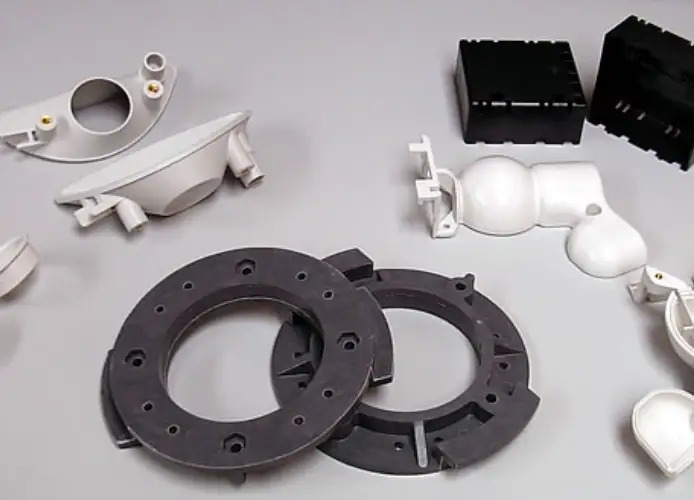
Phenolic and epoxy thermosets offer:
- High dielectric strength
- Arc resistance
- Thermal insulation
Ideal for electronic insulation molding, switches, connectors, and circuit protection.
Chemical Resistance
Thermosets resist:
- Solvents
- Oils
- Fuels
- Acids
- Alcohols
This is why they are widely used in industrial and chemical environments.
Strength and Rigidity
Cross-linked polymers create high-strength molded parts that maintain rigidity long-term.
Flame Resistance
Many thermosets are naturally flame-retardant, making them perfect for:
- Aerospace
- Automotive
- Electronics
- Industrial power systems
Cost-Effective Manufacturing
Thermoset injection molding produces:
- Large quantities
- Repeatable parts
- Low waste
- Reduced finishing steps
- High-quality injection components
Thermoset Molding Applications Across Industries
Thermoset plastics are used in industries where performance, stability, and safety matter.
Automotive Industry
Applications include:
- Brake and clutch components
- Under-the-hood housings
- Fuel system parts
- Heat shields
- Electrical modules
- Structural components
Phenolic and BMC parts withstand high heat, chemical exposure, and mechanical load.
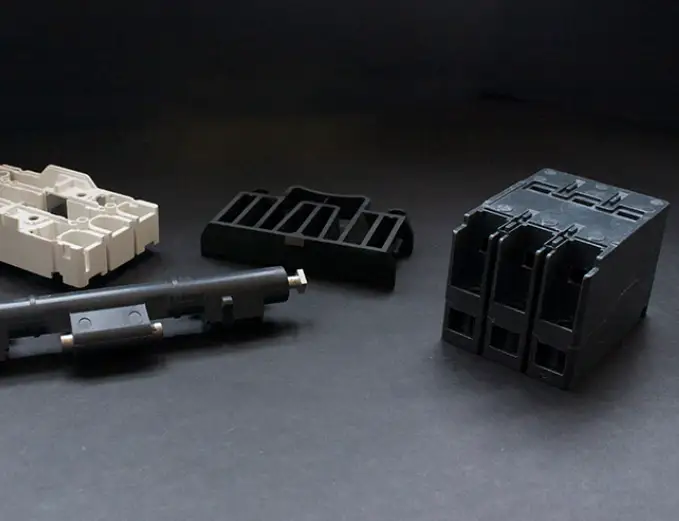
Aerospace and Defense
Aerospace requires lightweight, high-strength, heat-resistant, and flame-resistant materials.
Thermosets are used for:
- Electrical insulation molded parts
- Engine-adjacent components
- Structural reinforcement
- High-temperature housings
- Interior cabin components
- Aerospace thermoset components
Glass-fiber reinforced thermosets provide exceptional strength-to-weight ratios.
Electronics and Electrical
Thermosets dominate electrical markets due to:
- Dielectric performance
- Heat resistance
- Arc and track resistance
- Flammability performance
Common parts include:
- Switches
- Fuse holders
- Insulators
- Connectors
- Circuit protection components
Industrial Equipment
Thermoset molded parts are ideal for:
- Chemical plants
- Pumps and valves
- Power generation equipment
- High-heat machinery
Consumer and Commercial Products
Includes:
- Kitchenware components
- Handles and knobs
- Lighting fixtures
- Safety devices
Thermoset Molding Techniques: Beyond Injection Molding
Thermoset plastics can be formed using several molding techniques.
Compression Molding
A primary method for:
- SMC
- Certain BMC formulations
- Large structural parts
Compression molding is widely used in:
- Automotive
- Energy
- Aerospace structural components
Transfer Molding
Ideal for:
- Encapsulated electronics
- Precision components
- Thin-wall parts
Insert Molding
Thermosets bond exceptionally well to:
- Metals
- Composites
- Ceramic inserts
Making it perfect for:
- Connectors
- Terminals
- Mechanical assemblies
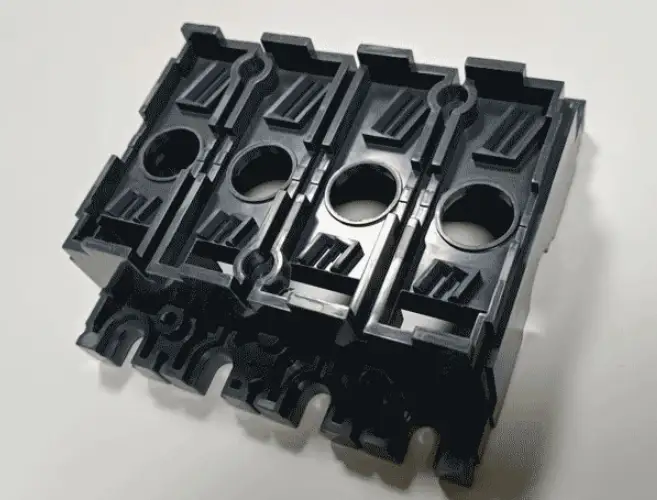
Thermoset Mold Design Considerations
Successful thermoset processing requires specialized mold design focused on:
- High temperature stability
- Controlled curing cycles
- Optimized runner and gating systems
- Pressure variations during cross-linking
- Predictable shrinkage behavior
Designers must account for factors such as:
- Flow characteristics
- BMC fiber orientation
- Venting requirements
- High-pressure injection
- Hot mold expansion
Proper design ensures precision thermoset molding and consistent plastic components.
Manufacturing Challenges and Solutions
While thermosets offer strong advantages, their processing requires experience.
Premature Curing
Thermoset materials can harden if overheated in the barrel.
Solution: Lower barrel temperature, controlled injection time.
Complex Flow Behavior
Thermosets behave differently from thermoplastics.
Solution: Special screw designs and optimized flow modeling.
Tool Wear
Glass-fiber reinforced materials increase wear.
Solution: High-hardness tool steels, surface treatments.
Longer Curing Cycle
Thermosets take longer to cure than thermoplastics.
Solution: Multi-cavity tools, cycle optimization, and advanced presses.
Why OEMs Choose Thermoset Injection Molding
OEMs select thermosets because the performance advantages outweigh cycle time tradeoffs.
Thermoset injection molded parts deliver:
- Heat-cured strength
- Long-term stability
- Enhanced safety characteristics
- Chemical resistance
- Higher performance in extreme conditions
Industries requiring mission-critical parts—such as aerospace, automotive, and electronics—value the reliability provided by cross-linked polymer molding.
Future Trends in Thermoset Injection Molding
The plastics industry is expanding its use of thermosets due to:
Advancements in High-Temperature Thermoset Plastics
New engineering formulations expand performance limits.
Thermoset Composites
Including:
- Carbon-reinforced thermosets
- Glass-fiber reinforced thermosets
- Hybrid thermoset composites
Automated Molding Solutions
Improved:
- Robotics
- Injection molding machines
- Automated curing controls
Sustainable Fillers
Using low-carbon mineral fillers and eco-resins.
Increased Use in EV and Aerospace
Driven by:
- Weight reduction
- Fire safety
- Insulation requirements
Conclusion
Thermoset injection molding remains essential for industries where failure is not an option. Its unmatched heat resistance, dimensional stability, chemical durability, insulation properties, and long-term strength make it superior to thermoplastics for a wide range of high-performance applications.
As industries move toward lighter, stronger, and safer components, the demand for:
- Thermoset molded components
- High-strength molded parts
- Electrical insulation molded parts
- Aerospace thermoset components
- Automotive thermoset parts
- Precision thermoset molding
continues to grow.
Thermoset injection molding will remain a cornerstone of the advanced manufacturing services used to produce the most reliable plastic products and mission-critical components across global industries.