

Medical plastic injection molding has become the foundation of modern healthcare manufacturing. From diagnostic device components to surgical device plastics, medical-grade injection molding allows manufacturers to produce precise, sterile, biocompatible, and cost-effective medical components at scale.
Today, hospitals, laboratories, pharmaceutical companies, and device manufacturers rely on this manufacturing method to create millions of parts that meet strict ISO standards, including ISO 13485 injection molding requirements and other cleanroom-controlled processes.
Whether you are developing disposable medical device parts, complex assemblies, micro-molded components, or large plastic housings, understanding the fundamentals of medical plastic injection molding is essential for every medical device manufacturer.
This guide explores the complete medical injection molding process, materials used, design considerations, cleanroom production, manufacturing standards, and why injection molding remains the most efficient solution for producing a wide range of medical products.
Understanding Medical Plastic Injection Molding
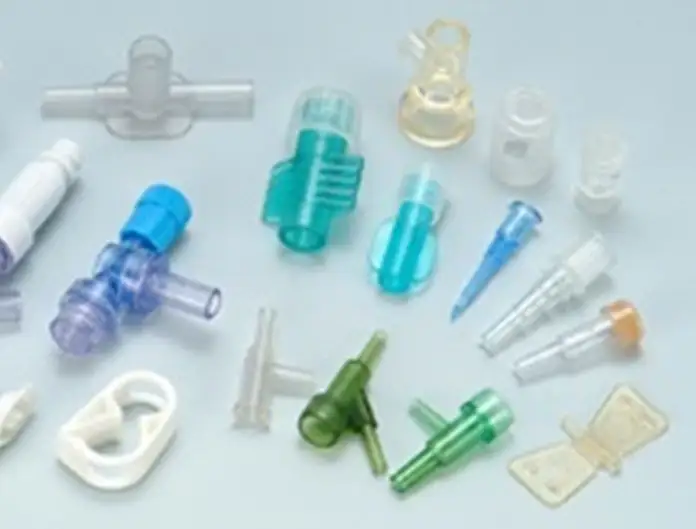
Medical plastic injection molding is the process of melting medical-grade plastic resin and injecting it into a precision-engineered mold to create highly accurate parts. These injection-molded parts are used in the medical device industry for components ranging from connectors and valves to surgical handles, diagnostic housings, fluid management components, medical tube connectors, and minimally invasive device parts.
Why is injection molding widely used in medical manufacturing
Medical device manufacturers choose injection molding because it offers:
- High precision and tight tolerance control
- Repeatability across high-volume production
- Compatibility with biocompatible and medical-grade thermoplastics
- Support for complex parts and micro medical injection molding
- Cost-efficiency for producing millions of parts
- Excellent surface finish and dimensional accuracy
The injection molding industry continues to evolve with fast cycles, advanced tooling, Class 7 cleanrooms, and specialized molding capabilities. From simple plastic components to complex multi-shot assemblies, injection molding for medical applications is unmatched in efficiency, quality, and scalability.
The Medical Injection Molding Process
The medical injection molding process follows the same principles as standard plastic injection molding but is controlled under medical-grade conditions.
Step-by-step overview
- Material selection — Choosing appropriate medical-grade plastic or biocompatible resin.
- Injection mold design — Creating the mold that shapes the final component.
- Melting the plastic — Molten plastic is prepared using injection molding machines.
- Injection phase — The melted material is injected under pressure into the mold.
- Cooling and solidifying — The plastic takes the shape of the mold cavity.
- Demolding — Carefully ejecting the part without causing defects.
- Quality inspection — Ensuring the component meets the standards of the medical industry.
- Packaging and sterilization — Preparing parts for medical use.
Cleanroom injection molding and sterile manufacturing processes are often used for components that must meet strict hygiene and contamination-free requirements.
Materials Used in Medical Plastic Injection Molding
Choosing the right material is crucial. The medical field uses a wide range of medical-grade plastic resins, each offering unique performance, safety, and durability characteristics.
Common medical-grade thermoplastics
- Polycarbonate (PC) — For transparent diagnostic device components
- Polypropylene (PP) — For syringes, containers, and medical consumable parts
- Polyethylene (PE) — Flexible tubing, connectors
- ABS — Strong housings for medical equipment
- TPE/TPU — Soft, flexible applications
- POM (Acetal) — High-precision medical device components
- PEEK — High-performance polymer for critical applications
- Medical-grade silicone — For insert molding and flexible parts
Special materials used in medical devices
- Biocompatible plastics
- Antimicrobial plastic materials
- FDA-compliant plastics
- Implantable-grade plastics
- High-purity medical plastics
These materials are selected because they can withstand sterilization, chemical exposure, impact, stress, and other demanding conditions.

Cleanroom Injection Molding and ISO Standards
Medical plastic injection molding is governed by strict regulatory standards. Most medical device manufacturers follow:
- ISO 13485 — Quality management system for medical device manufacturing
- ISO 14644 — Cleanroom production requirements
- FDA 21 CFR 820 — U.S. regulatory standards for medical devices
Cleanroom molding
Many critical medical components must be produced in environments free from contamination. Cleanroom injection molding is necessary for:
- Medical device housings
- Fluid management plastic parts
- Surgical device plastics
- Diagnostic components
- Laboratory plastic components
- Pharmaceutical plastic parts
Class 7 and Class 8 cleanrooms maintain controlled levels of particulates, temperature, and humidity to ensure product safety.
Injection Mold Design for Medical Applications
The injection mold is the heart of the manufacturing process. A precision medical housing injection mold or multi-cavity tool can produce millions of consistent parts.
Key mold design features
- Precise cavity layout for tight tolerance
- Smooth surface finish for sterile applications
- Proper venting to avoid burn marks
- Gate placement for controlled material flow
- Durable steel for long production life
- Compatibility with insert molding and overmolding
High-precision medical tooling ensures parts are accurate, repeatable, and optimized for fast cycles.
Types of Medical Injection Molding Processes
Medical manufacturing relies on several molding processes, depending on product design and performance requirements.
Standard Medical Plastic Injection Molding
Used for high-volume production of plastic parts, housings, and medical consumables.
Insert Molding
Metal or electronic components are placed into the mold and encapsulated with plastic — ideal for:
- Surgical instruments
- Connectors
- Handles
- Custom medical components

Overmolding
Combining multiple materials for comfort, grip, or protection.
Micro Medical Injection Molding
Used for extremely small, high-precision components used in minimally invasive devices.
Multi-shot molding
Allows complex parts with multiple materials in one cycle.
Applications of Medical Plastic Injection Molding
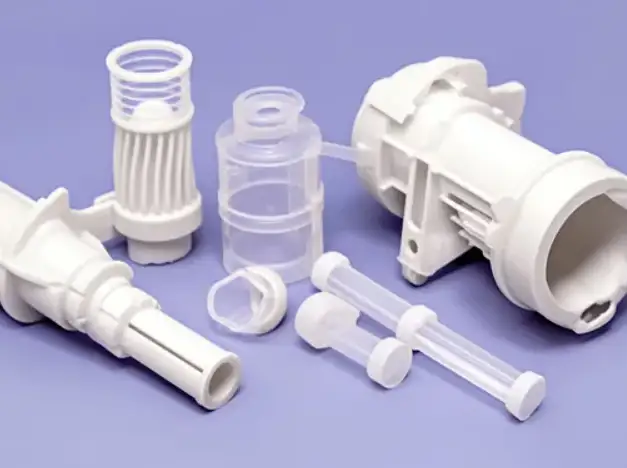
Injection molding is used extensively across the medical and pharmaceutical industries. It enables manufacturers to produce:
Medical components and devices
- Diagnostic device components
- Medical syringe components
- Catheter components
- Surgical device plastics
- Medical tube connectors molding
- Disposable medical device parts
- Medical consumables
Equipment housings and structural parts
- Medical equipment plastic parts
- Electronic housings
- Fluid reservoirs
- Pumps and valves
Specialty components
- Healthcare plastic components
- Laboratory plastic components
- High-precision micro parts
- Antimicrobial plastic materials
Manufacturers rely on these molding capabilities to produce a wide range of medical devices and components.
Benefits of Medical Plastic Injection Molding
Injection molding offers major advantages for medical device manufacturing:
High precision and repeatability
Essential for parts that must meet tight dimensional requirements and function perfectly in medical devices.
Compatibility with medical-grade plastics
Allows for biocompatibility, sterilization, and durability.
Efficient for high-volume production
Multi-cavity molds and automated systems support millions of parts with consistent quality.
Versatility
Injection molding supports:
- Complex parts
- Micro molded components
- Disposable parts
- Overmolded handles
- Sterile packaging
Cost-effectiveness
Higher upfront tooling cost, but extremely low cost per part at scale.
Challenges in Medical Injection Molding
Although highly reliable, medical injection molding has industry-specific challenges:
- Maintaining strict ISO and FDA compliance
- Material selection for biocompatibility and sterilization
- Preventing defects in micro-scale medical parts
- Controlling contamination in cleanrooms
- Designing molds for complex geometries
- Achieving consistent tolerance across high-volume batches
Experienced injection molders and a strong quality management system are essential for meeting the standards of the medical industry.
Choosing a Medical Injection Molding Company
A trusted medical injection molding company should offer:
- ISO 13485 certification
- Cleanroom injection molding services
- Medical device manufacturing services
- Experienced injection molders
- Full injection molding capabilities
- High-precision tooling design
- Material selection assistance
- Prototyping and product development
- Scalable production for many medical products
Manufacturers that follow industry standards and have proven molding expertise can deliver precision medical parts that meet regulatory requirements.
Future Trends in Medical Plastic Injection Molding
The medical device industry continues to grow rapidly, and injection molding technology evolves with it.
Key trends
- Increasing use of antimicrobial and biocompatible materials
- Advanced micro molding for minimally invasive devices
- Automation and robotics in medical manufacturing
- Higher demand for disposable medical products
- Greater use of simulation in mold design
- Rapid prototyping using medical-grade plastics
- Digital manufacturing and smart factories
Injection molding will continue to be essential for producing high-quality plastic components used in medical devices.
Conclusion
Medical plastic injection molding plays a central role in manufacturing a wide range of medical devices and components. Its precision, scalability, material versatility, and ability to meet strict ISO and FDA standards make it the preferred manufacturing method for modern healthcare.
From medical injection molding services,medical device manufacturing, and high-precision tooling to cleanroom molding and custom medical plastics, this technology provides an unmatched combination of quality and efficiency.
As the medical field demands more advanced, sterile, biocompatible, and high-performance plastic components, injection molding will continue to lead the way in innovation and production capabilities.