Email: keenhu@lztooling.com | Whatsapp/Wechat/Phone: +86 134 1694 6882

Custom switch housing with LTC Plastic, with design and engineering support, DFM, OEM, ODM, mold making, post-finishing and shipment support
In every electrical system, the switch is the primary control point—but the real protection, structure, and safety come from the switch housing. This outer housing is far more than a simple cover. It serves as a protective electrical switch enclosure that shields internal contacts, wiring, and terminals from mechanical damage, dust, moisture, and accidental contact.
Whether referred to as a switch casing, plastic switch housing, or metal switch housing, this component directly determines durability, insulation performance, user safety, and overall product lifespan.
From wall switch housing used in residential buildings to precision toggle switch housing, rocker switch housing, and push button switch housing used in control systems, switch housings are essential across countless applications. In factories and heavy-duty environments, the industrial switch enclosure plays a vital role in protecting switches from heat, vibration, chemicals, and impact.
As automation, smart devices, renewable energy systems, and intelligent control equipment continue to expand, the performance demands placed on switch housings are rapidly increasing. Today’s switch housing must deliver high strength, flame resistance, excellent insulation, ergonomic design, and long-term reliability.
This guide provides a complete professional overview of switch housing design, materials, manufacturing, customization, quality control, and real-world applications—helping OEMs, engineers, and product developers make confident, informed decisions.
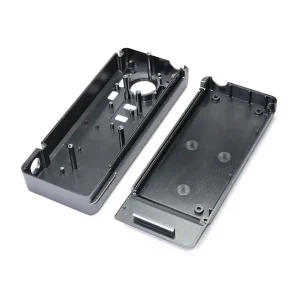
A switch housing is the protective outer enclosure that contains and safeguards the internal working components of an electrical or electronic switch. Often referred to as a switch protection box or electrical control switch housing, it plays a critical role in ensuring safety, stability, and long-term performance in both residential and industrial applications.
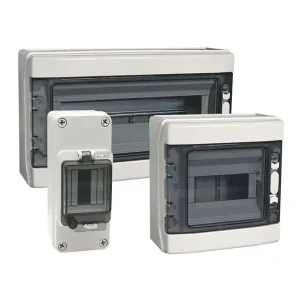
Depending on the environment, switch housings may be designed as waterproof switch housing, dustproof switch enclosures, or outdoor switch housing solutions.
The primary functions of a switch housing include mechanical protection for moving parts, electrical insulation to prevent shock and short circuits, and environmental resistance against moisture, dust, heat, and chemicals. Advanced designs also use flame-retardant switch housing materials and impact-resistant switch casing structures to enhance safety in harsh conditions.
A standard switch housing assembly typically consists of:
Actuator (button, rocker, toggle, or slider)
Spring mechanism
Electrical contacts
Terminal pins
Insulating shell, cover, and back plate
Many products are built as panel mount switch housing or surface mount switch housing, allowing flexible installation across devices and control systems. In modern control systems, multiple switches may be integrated into a multifunction switch panel for efficient operation.
Most switch housings are manufactured using ABS plastic or engineering-grade polymers to ensure precise dimensional tolerances. This precision guarantees smooth actuation, accurate electrical contact, and reliable operation across thousands or even millions of switching cycles.
In many electrical systems, failures do not originate from the internal electronics—but from poor switch housing design, weak materials, or inaccurate manufacturing. A high-quality custom switch housing directly determines the safety, durability, performance, and lifespan of the entire switch assembly. Whether used as a switch housing for electronics, a PCB switch enclosure, or a miniature switch housing, quality is non-negotiable.
A precision injection molded switch housing made from ABS switch housing, polycarbonate switch enclosure, or nylon switch housing materials provides stable insulation between live conductors and users. Flame-retardant, non-conductive materials reduce the risks of electric shock, short circuits, and electrical fires—especially in compact PCB switch enclosure designs.
Every switch housing must endure:
Repeated pressing cycles
Continuous vibration
Accidental impact
Daily temperature fluctuations
A weak plastic shell may crack, deform, or loosen over time. By contrast, engineering-grade housings ensure long-term structural stability, whether used in a rocker switch panel housing holder, a panel switch holder housing kit, or a black automotive mount toggle switch.
Dust, moisture, oil, and chemicals rapidly degrade poorly sealed housings. A properly designed polycarbonate switch enclosure or nylon switch housing significantly improves IP protection levels and long-term environmental resistance.
The tactile feel of pressing a button, the smooth action of a rocker, and the stability of a toggle all depend on housing precision and rigidity.
From surface texture to laser marking, the external housing defines visual quality and brand identity just as much as internal performance.
Switch housings are engineered in many structural styles to match different voltage levels, mounting methods, and environmental demands. From compact consumer electronics to high-voltage switch enclosure systems in industrial power equipment, each type serves a specific functional role.
1. Push Button Switch Housing
Widely used in control panels, home appliances, medical devices, and industrial machines, this low-voltage switch housing type features a compact switch shell, high mechanical precision, and smooth tactile feedback. Many designs include a switch housing with mounting holes for easy panel installation.
2. Rocker Switch Housing
Common in power strips, household equipment, and LED lighting systems, including LED light bar rocker switch applications. These often use a light bar rocker switch holder with a strong internal frame, a wide actuator surface, and excellent fatigue resistance.
3. Toggle Switch Housing
Used in aviation, marine electronics, and industrial control systems, toggle styles are built as heavy-duty switch casing units with strong sealing. Both plastic and aluminum versions are available for demanding high voltage switch enclosure requirements.
4. Slide Switch Housing
Frequently used in consumer electronics, toys, and wearable devices, slide switch housings are known for ultra-compact size, precision guide rails, and low actuation force.
5. Rotary Switch Housing
Applied in audio equipment, industrial selectors, and instrument panels. These housings provide high rotational accuracy, multi-position indexing, and strong internal reinforcement.
6. Waterproof & Sealed Switch Housing
Designed as sealed switch enclosure systems with switch housing with gasket structures, these models meet IP65 switch housing and IP67 switch enclosure standards for outdoor, marine, medical, and wash-down environments.
Each switch housing type is carefully selected based on voltage level, environmental exposure, installation method, and long-term reliability requirements.
The material used in a switch housing directly affects electrical safety, mechanical strength, environmental resistance, visual appearance, and production cost. From household light switch housing to heavy-duty industrial control switch enclosure systems, selecting the right material is essential for reliable performance.
ABS (Acrylonitrile Butadiene Styrene)
ABS remains the most widely used material for automotive switch housing, consumer electronics, and general-purpose switches. It offers excellent impact resistance, smooth surface finish, easy injection molding, and low cost. ABS is ideal for gang rocker switch, way rocker switch panel, and indoor power switch enclosure applications. However, it has limited UV and heat resistance for long-term outdoor use.
Polycarbonate (PC)
PC is preferred for NEMA 4 switch housing, corrosion-resistant switch enclosures, and UV-resistant switch housing designs. It provides extremely high impact strength, outstanding heat resistance, and excellent flame-retardant performance. Transparent grades are ideal for rotary switch enclosures and visible control interfaces.
PC/ABS Blends
This balanced material combines the toughness of PC with the cost efficiency of ABS. It is widely used in automotive switch housing, control panels, and mid-range industrial control switch enclosure applications.
Nylon (PA6 / PA66)
Nylon is chosen for high-load and high-temperature switch housings. It offers superior mechanical strength, wear resistance, and fatigue performance, making it suitable for marine switch housing and structural switch components.
Flame-Retardant Engineering Plastics (UL94 V-0)
FR-ABS, FR-PC, and glass-filled flame-retardant nylon are mandatory in export-grade power switch enclosures and industrial systems.
Silicone Rubber (Overmolding Applications)
Used for waterproof sealing, dust-proof membranes, and soft-touch buttons, especially in marine switch housing and outdoor designs.
For automotive installations, aluminum housing brackets for cars and housing brackets for car truck solutions are often combined with plastic housings for enhanced structural reinforcement.
To ensure precision, durability, and large-scale production efficiency, modern switch housings are manufactured using several proven processes. From a simple switch holder panel switch holder to a complex smart switch housing or emergency stop switch housing, each production method serves a specific purpose.
Plastic injection molding is the most widely used method for producing switch housings due to its efficiency, accuracy, and scalability. It is ideal for manufacturing custom molded switch casing, modular switch housing, sensor switch enclosure, and switch housing for control panel applications.
Key Advantages:
High-dimensional accuracy
Smooth and consistent surface finish
Stable and repeatable quality
High production efficiency for mass manufacturing
Low unit cost at large volumes
Ability to form complex internal and external geometries
Injection Molding Process Flow:
Plastic pellets are heated and melted → molten plastic is injected into the mold cavity → cooling and solidification → part ejection → trimming and full inspection. This process is widely used for products such as holder panel switch holder housing, switch holder housing kit ABS, and precision electronic control switch casings.
CNC machining is mainly applied to aluminum and engineering plastic samples for R&D and product testing. It provides extremely high precision and design flexibility but comes with a higher unit cost, making it suitable for prototype smart switch housing and structural evaluation of sensor switch enclosure designs.
Overmolding combines rigid plastic housings with soft silicone or rubber layers. This is commonly used in emergency stop switch housing, waterproof control switches, and ergonomic designs. It enables:
Waterproof and dustproof sealing
Soft-touch button surfaces
Improved grip and tactile feedback
Together, these manufacturing methods ensure that modern switch housings meet demanding requirements for performance, safety, reliability, and appearance across a wide range of industries.
Professional mold design is the foundation of precision, durability, and long service life for every embedded switch enclosure, whether it is a small plastic switch housing, a handheld switch enclosure, or a transparent switch housing used in consumer and industrial electronics. Poor mold design directly leads to alignment issues, sealing failures, and structural weakness.
1. Uniform Wall Thickness
Balanced wall thickness prevents common defects such as sink marks, warping, and weak structural zones. This is especially important for snap-fit switch housing and screw mount switch housing, where uneven shrinkage can affect assembly accuracy and locking strength.
2. Proper Draft Angles
Correct draft angles ensure smooth demolding and prevent surface scratches, improving mold life and dimensional stability. This is critical for high-volume parts like panel housing holder black plastic, and housing holder black plastic single.
3. Precision Guide Slots and Tracks
Guide structures control the smooth movement of buttons, sliders, and toggles. High-precision guide slots are essential for accurate actuation in handheld switch enclosures and switch cover enclosures.
4. Integrated Screw Bosses and Snap-Fit Clips
Well-designed screw bosses and snap-fit features reduce assembly steps and improve overall rigidity. Many products use combinations such as holder housing kit ABS plastic, with molded clips for fast installation.
5. Waterproof Sealing Grooves
Gasket channels, O-ring grooves, and overmolding seal structures are key to water and dust resistance. These features enable IP-rated performance for outdoor and industrial switch applications.
6. Gate and Vent Optimization
Proper gate positioning and effective venting ensure uniform material flow, eliminate burn marks, reduce air traps, and improve surface quality for high-precision small plastic switch housing products.
High-quality mold design creates switch housings that are stronger, more reliable, easier to assemble, and fully compliant with demanding electrical and environmental performance standards.
Selecting the right switch housing manufacturing partner is a strategic decision that directly affects product safety, durability, and long-term brand reputation. Whether you need a protective switch casing, a weatherproof switch enclosure, or a switch housing for harsh environments, your supplier’s technical strength and quality systems matter as much as pricing.
A reliable manufacturer should demonstrate strong injection molding capability, in-house mold design experience, and stable access to flame-retardant materials. Expertise in waterproof structures, such as a switch housing with cable entry, sealed gaskets, and pressure-tested designs, is essential for outdoor and marine products. Certifications like ISO 9001, along with proven export certification experience, ensure consistent quality for global markets.
You should also verify whether the supplier can produce specialized designs such as electrical junction switch boxes, terminal switch enclosures, and marine-grade units like holder black plastic single mount, black plastic single mount marine, and plastic single mount marine toggle. For automotive projects, the ability to integrate with a mounting panel for vehicles or a panel for vehicles automotive car is a major advantage.
Before finalizing a supplier, always ask:
What flame-retardant materials do you support?
Can you provide IP67 or higher waterproof structures?
Do you support custom mold development?
What is your typical mold lead time?
What is your MOQ for mass production?
Do you offer overmolding solutions?
The right partner delivers not only parts, but long-term manufacturing reliability.
The electronic switch housing is far more than a simple outer shell. It is a core structural and protective component that directly defines electrical safety, mechanical durability, environmental resistance, user experience, and overall product aesthetics. In critical applications such as the industrial electrical switch box, housing quality determines whether a system performs reliably for years or fails prematurely.
As global demand accelerates across automation, smart homes, electric vehicles, renewable energy, and marine equipment, the need for high-performance OEM switch housing and ODM switch enclosure solutions continues to rise.
From vehicle dashboards to outdoor control panels, switch housings are now commonly integrated with waterproof panel systems and heavy-duty mounting solutions, such as brackets for car truck marine installations used in car truck marine RV environments.
Structural reinforcements like front frame supports and corrosion-resistant finishes, such as anodized aluminium brackets, further enhance durability in harsh conditions.
For OEMs and product developers, long-term success depends on selecting the right materials, professional switch housing mold design, and precision-controlled switch housing injection molding processes. These factors directly ensure:
Lower failure rates
Higher product reliability
Strong regulatory and safety compliance
Improved market positioning and brand trust
In modern electronics and electrical systems, the quality of the switch housing ultimately defines the performance, safety, and perceived value of the switch itself. Investing in the right manufacturing partner is no longer optional—it is a competitive necessity.