Email: keenhu@lztooling.com | Whatsapp/Wechat/Phone: +86 134 1694 6882

Custom PCB enclosure with LTC Plastic, with design and engineering support, DFM, OEM, ODM, mold making, post-finishing and shipment support
Introduction: Why PCB Enclosures Are Essential in Modern Electronics
In today’s rapidly advancing electronics industry, the PCB sits at the heart of almost every electronic device. From automation systems and smart home products to medical instruments and telecom equipment, PCBs power the intelligence behind modern technology. However, without a properly engineered enclosure, even the most advanced circuit board remains vulnerable to dust, moisture, impact, heat, and chemical exposure.
This is where the PCB enclosure becomes essential. A well-designed PCB enclosure box is a protective box created specifically to safeguard printed circuit boards and related components. Whether made as a plastic PCB enclosure for lightweight consumer devices or a waterproof PCB enclosure for harsh outdoor environments, the right housing directly impacts product safety, lifespan, and performance.
Modern PCB housing plastic solutions also allow flexibility in design, size, and mounting methods. From compact wall-mounted units to larger industrial cabinets, enclosure structures can be tailored to fit exact functional and installation requirements. Plastic materials further enhance insulation, corrosion resistance, and cost efficiency.
Whether used indoors or outdoors, a properly engineered PCB enclosure improves reliability, simplifies assembly, and ensures compliance with industry safety standards. For product designers, engineers, and manufacturers, choosing the right plastic enclosure is no longer optional—it is a critical part of professional electronic product development.
A PCB enclosure is a protective electronic circuit enclosure designed to house and safeguard a PCB from environmental, mechanical, and electrical hazards. By providing a secure plastic enclosure, these cases prevent damage from dust, moisture, impact, and accidental contact, while also reducing electromagnetic interference (EMI). They are essential for maintaining the reliability, safety, and longevity of electronic devices.
Modern PCB electronic enclosure solutions are available in a wide range of sizes and materials, including ABS plastic, offering durability, insulation, and lightweight design. Small-scale options, such as a small PCB enclosure or PCB project box, are ideal for compact devices, prototyping, and electronics project boxes, whereas larger enclosures are used for industrial control units or power modules.
Custom PCB enclosures can be engineered to meet specific application requirements, including unique shapes, mounting options, and airflow designs.
PCB enclosures are widely used across multiple industries and applications, including:
Electronic enclosure units for industrial automation
Power supply electronic circuit enclosure modules
Internet of Things (IoT) and smart devices
Medical electronics and instrumentation
Telecommunications equipment
Automotive electronics and control systems
By selecting the appropriate plastic enclosure, manufacturers can protect sensitive components, optimize performance, and enhance the overall appearance and usability of their electronic products.
1. Protection of Sensitive Components
A circuit board contains delicate components such as microchips, resistors, capacitors, and microcontrollers. Even minor exposure to dust, moisture, or vibration can cause permanent damage.
A high-quality enclosure box isolates the board from harmful environmental conditions, ensuring reliable operation for both DIY projects and industrial machine applications. Outdoor PCB enclosure solutions, including IP67-rated designs, provide extra protection for harsh outdoor environments.
2. Electrical Safety
PCB enclosures prevent direct contact with live circuits, reducing the risk of electric shock, short circuits, or fire. Flame-retardant PCB enclosures are especially important for high-voltage or industrial systems. Properly designed housings safeguard connectors and other critical parts while complying with safety regulations.
3. Mechanical Strength and Impact Resistance
During handling, installation, or operation, devices can experience vibration, drops, or impacts. ABS PCB enclosures and polycarbonate PCB enclosures add robust mechanical strength and structural stability, protecting sensitive electronics from damage.
4. EMI/RFI Protection
Electronic devices can be affected by electromagnetic or radio-frequency interference. With shielding, conductive coatings, or metal inserts, PCB enclosures provide a reliable solution for stable signal performance.
5. Thermal Management
PCBs generate heat during operation. Many enclosures incorporate vents, heat sinks, or airflow channels to manage internal temperatures effectively.
6. Visual Appearance and Branding
The enclosure also defines a product’s external look. Color, texture, logo embossing, and design details enhance brand identity, market appeal, and user experience. Choosing the right manufacturer ensures that these guidelines are met for both form and function.
PCB enclosures are available in a variety of designs depending on the electronic application, installation method, and environmental conditions. Selecting the right type ensures protection, reliability, and ease of use.
The most widely used PCB junction box option due to:
Electrical insulation
Lightweight and corrosion-resistant structure
Cost-effective production
Easy mold customization and printing for logos or labels
Common materials include ABS, Polycarbonate (PC), PC/ABS blends, and Nylon. These are ideal for PCB instrument enclosures, PCB control box enclosures, and general PCB mounting enclosure needs.
Used in applications requiring:
Extreme EMI/RFI shielding
High mechanical strength
Industrial or harsh electrical environments
Materials include aluminum, stainless steel, and steel. They are often applied to high-performance modules or sensitive boards.
Designed for modular industrial systems where boards are mounted on standard DIN rails. Typical uses include PLC modules, signal processors, and power converters.
Compact handheld PCB enclosure solutions protect portable devices such as testing instruments, wireless controllers, and data collection units.
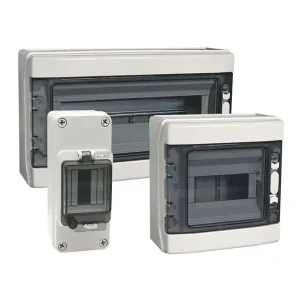
Used for control panels, PCB control box enclosure modules, smart home devices, and industrial distribution boards.
Transparent PCB enclosures and other waterproof designs are essential for outdoor or harsh environments, including solar systems, marine electronics, agricultural controllers, and construction equipment.
Choosing the right material for a PCB electronics housing directly impacts durability, safety, appearance, and cost. Modern PCB enclosures include options for indoor, outdoor, industrial, and electronic project applications.
Good impact resistance for dustproof PCB enclosure designs
Smooth surface finish for branding or labeling
Easy processing, extrusion, and 3D printing
Low cost, suitable for PCB plastic casing and PCB prototype enclosure projects
Limitation: Lower UV and heat resistance
Extremely high impact and mechanical strength
Transparent options are ideal for visual inspection
Excellent heat resistance and flame-retardant performance
Suitable for electrical projects and industrial PCB electronics housing
Balanced strength and thermal stability
Lower cost than a pure PC
Excellent moldability for screw-mounted and custom PCB plastic casing designs
High strength, wear resistance, and fatigue durability
Suitable for structural PCB enclosure components, screw bosses, and mounting features
FR-ABS, FR-PC, and glass-filled flame-retardant nylon
Widely used in power modules, industrial electronic project enclosures, and dustproof PCB enclosure designs
Aluminum, stainless steel, carbon steel
Used where EMI shielding or extreme mechanical protection is more critical than weight or cost
To ensure reliability, safety, and global compliance, PCB enclosures must adhere to strict international standards. This is especially important for specialized applications such as PCB power supply enclosures, PCB sensor enclosure, or PCB terminal enclosure, where protection against dust, moisture, and impact is critical.
IP ratings define how well an enclosure resists dust and water ingress:
IP54 – Protected against dust and splash
IP65 – Dust-tight and resistant to water jets
IP66 – Withstands heavy water spray
IP67 – Temporary immersion; often used for IP67 waterproof polycarbonate enclosures
IP68 – Continuous immersion in water
Proper sealing, corner design, and thickness of the enclosure walls are key factors in achieving these ratings. Durable gaskets and cable entry seals further enhance protection.
UL94 V-0 – Highest fire-resistant rating for electrical boxes
V-1, V-2 – Moderate fire resistance for general-purpose enclosures
UL Certification for the US market
CE marking for Europe
RoHS compliance for hazardous material restriction
REACH regulation for chemical safety
PCB enclosure manufacturing processes, including PCB design software-guided prototyping, ensure proper wall thickness, corner reinforcement, and sealing performance. These standards guarantee that enclosures are durable, reliable, and ready for export in industrial, commercial, and consumer electronics applications.
PCB enclosures are manufactured using a variety of methods depending on material, volume, and application requirements. Choosing the right production method ensures dimensional accuracy, durability, and regulatory compliance for applications ranging from mini PCB enclosure projects to large industrial systems like PCB wall mount enclosure or PCB surface mount enclosure designs.
Injection-molded plastic enclosures are the industry standard for general-purpose PCB housings. Benefits include:
High-dimensional accuracy
Smooth surface finish for logos or labeling
Capability for complex mechanical designs, openings, and mounting bosses
Cost efficiency at high volumes
UV-resistant materials for PCBs in outdoor environments
Process steps: Plastic resin is heated, melted, injected into the mold, cooled, and ejected. Final steps include trimming, inspection, and packaging. Many Hammond-style housings or IP65-resistant enclosures are produced this way.
Used for both plastic and aluminum enclosures. CNC machining offers precise dimensions for prototypes or small batches, but at a higher per-unit cost.
Ideal for rail-type enclosures with simpler structures. Lower tooling cost makes extrusion suitable for PCB surface mount enclosure rails or elongated housings.
Involves laser cutting, bending, welding, and powder coating to produce mechanical, durable, and corrosion-resistant metal PCB housings.
These manufacturing methods ensure that PCB enclosures meet design, safety, and environmental standards for a wide range of electronics applications.
Professional mold design is essential to ensure high-quality performance, durability, and protection for PCB electronics protection box, PCB waterproof project box, and rugged PCB enclosure applications. Proper design allows the enclosure to withstand mechanical stress, environmental conditions, and long-term usage.
Maintaining consistent thickness enhances mechanical strength, prevents sink marks, and reduces warping. This is critical for built-in features such as mounting bosses, clips, and guides that secure the selection of electronic components.
Correct draft angles enable smooth part ejection, reduce CNC tooling wear, and prolong in-house mold life.
Screw bosses for fasteners
Snap-fit clips for easy assembly
PCB guide rails to securely hold boards
Built-in channels for accessories and label placement
Vent slots and grid openings
Hidden airflow paths to improve heat dissipation
Ensures reliable performance for sensitive electronics
Gasket grooves for moisture protection
Overmolded seals
Ultrasonic welding design for rugged PCB enclosure integrity
Conductive coatings
Metal inserts, including stainless steel options
EMI gaskets for sensitive PCB electronics protection box systems
Well-designed enclosures combine structural strength, environmental protection, and functional integration to provide a complete solution for modern electronics, whether used in industrial, outdoor, or portable applications.
1. Industrial Automation
Used for indoor and outdoor use, PCB enclosures protect PLC control modules, industrial sensor housings, and servo controller PCB boxes. Both plastic and metal designs provide durability, lightweight options, and secure terminal connections for harsh factory environments.
2. Power Electronics
Enclosures house power supplies, DC/AC inverters, and battery management systems. Designs often feature spray-resistant coatings and high thermal capability to ensure reliable operation in demanding conditions.
3. Medical Devices
From diagnostic equipment to monitoring systems and portable instruments, plastic PCB enclosures offer lightweight, safe housings suitable for frequent handling and indoor applications. FDM prototypes allow rapid design iterations before mass production.
4. Telecommunications
Network equipment, fiber optic distribution units, and router/modem enclosures require precise layouts and durable protection. Both Serpac-style plastic and metal enclosures are used, depending on environmental exposure.
5. Smart Home & IoT
Smart thermostats, wireless gateways, sensor modules, and lighting controllers benefit from compact, lightweight, and aesthetically designed enclosures suitable for indoor and outdoor use.
6. Automotive Electronics
ECU enclosures, sensor housings, and EV control modules require plastic and metal enclosures with high mechanical strength, thermal management, and spray-resistant surfaces for automotive environments.
PCB enclosures across these industries combine protection, lightweight construction, and functional capability to support sensitive electronics in diverse applications.
A PCB enclosure is far more than a simple housing—it is a vital engineering component that impacts product safety, electrical performance, heat management, and long-term durability. From compact low-voltage PCB enclosure units to large PCB industrial enclosure systems, a well-designed enclosure ensures compliance with safety standards and supports weatherproof protection in outdoor environments.
Modern electronics require PCB device enclosure solutions with precise features such as mounting flanges, robust wall construction, and reliable sealing to withstand dust, moisture, and mechanical stress.
Sizes vary widely, from small x 50 mm enclosures to larger 125B and 4X-rated cabinets, accommodating a wide variety of applications, including industrial automation, renewable energy, automotive systems, medical devices, and IoT devices.
Choosing the right custom PCB enclosure allows manufacturers and OEMs to deliver superior protection for sensitive circuits, lower failure rates, and higher reliability, while also enhancing product aesthetics and brand identity. Weather-resistant and mechanically robust enclosures increase competitiveness in demanding markets and extend the operational lifespan of electronic devices.
In an era where electronics are integrated into nearly every aspect of life, professional design and manufacturing of PCB enclosures is essential. From protecting small control boards to housing complex industrial modules, high-performance enclosures are the foundation of safe, reliable, and future-ready electronic products.