
Insert molding service
Custom insert molding plastic parts with LTC Plastic, with design and engineering support, OEM, ODM, mold making, and post-finishing support.

Insert molding is a highly versatile and cost-effective manufacturing process widely used in modern plastics engineering. By integrating a type of insert—such as metal components, threaded inserts, or pre-formed parts—directly into molten plastic within a single injection molding cycle, manufacturers can produce stronger, more reliable plastic parts while reducing assembly time and cost. This molding process improves structural integrity and enhances overall part performance, making it ideal for applications that demand precision, durability, and compact design.
Insert molding and overmolding are closely related techniques, often referred to together as overmolding and insert molding. While overmolding typically covers or bonds one material over another, insert molding embeds solid components directly into the mold before the plastic cures, creating hybrid parts with superior functionality. These processes are widely applied in industries such as automotive, consumer electronics, medical devices, and industrial equipment, where high-performance plastic injection molding solutions are required.
A successful insert molding project requires careful injection molding design, material selection, and tooling considerations to ensure proper bonding, dimensional accuracy, and long-term reliability. By mastering these principles, engineers and manufacturers can deliver cost-efficient, high-quality parts that meet the rigorous demands of today’s advanced plastic applications.

What Is Insert Molding?
Insert molding, also known as insert injection molding, is a specialized injection molding process in which metal or pre-formed components are placed into the mold cavity before molten plastic is injected. As the plastic cools and solidifies, it encapsulates the insert, forming strong molded-in inserts and creating a single, integrated part.
This technique includes both metal insert molding and plastic insert molding, and is often used alongside the overmolding process, collectively referred to as insert molding and overmolding, to produce hybrid components with superior performance.
Common types of inserts include:
Threaded inserts
Brass inserts
Bushings and bearings
Pins and shafts
Electrical contacts and fasteners
Stamped metal components
Sensors or magnets
By embedding these components directly into the plastic, manufacturers improve structural strength, enhance product functionality, and reduce assembly steps. Modern injection molding machines are designed to precisely place inserts, ensuring consistent part quality and repeatable performance in high-volume production.
How Insert Molding Works: Step-By-Step Process
1. Insert Preparation
Before production, each metal insert or pre-formed component must be properly prepared. This often involves cleaning, degreasing, surface roughening, and sometimes pre-heating, especially for larger inserts.
Pre-heating helps prevent defects such as sink marks or incomplete bonding when embedding plastic-metal components. Proper preparation ensures consistent quality in plastic parts with inserts across high-volume production runs.
2. Insert Placement
Inserts can be positioned manually by operators, semi-automatically with specialized tool fixtures, or fully automatically using robotic systems. Using insert placement with automation ensures precise alignment, reduces cycle time, and increases consistency.
Accurate placement is critical for applications like automotive parts and electrical insert molding, where misalignment can affect performance or safety.
3. Mold Closing
Once inserts are in position, the mold closes tightly to secure them. Locating features and cavities prevents shifting during the plastic injection phase, allowing the formation of high-quality insert molded parts with integrated fastening capabilities.
4. Injection of Thermoplastic Resin
Molten thermoplastic or resin is injected around the inserts at controlled pressure. The plastic flows around the metal insert, creating strong plastic-metal components. This step demonstrates how insert molding allows multi-material assemblies to be produced in a single step, often outperforming alternative methods like overmolding vs traditional mechanical fastening.
5. Cooling and Solidification
Controlled cooling is critical to prevent warpage or internal stress, particularly when parts with metal inserts are used.
6. Part Ejection
After solidification, the molded part is ejected. Automated inspection systems often verify proper insert encapsulation, ensuring reliability in high-precision parts such as plastic parts with inserts for automotive or electronic applications.
By using insert molding, manufacturers can produce durable, multi-material parts efficiently, reducing assembly steps while achieving superior performance in complex plastic injection components. CNC machining may also be combined for post-processing when required, adding precision features to the finished part.

Advantages of Insert Molding
1. Stronger and High-Strength Molded Parts
The insert molding process creates a permanent bond between metal parts or other embedded components and molten plastic during injection. By molding around inserts, manufacturers produce precision-molded inserts and unified injection-molded parts with excellent structural integrity, ideal for complex parts in demanding applications.
2. Reduced Assembly Steps
Custom insert molding eliminates the need for screws, adhesives, or press-fitted components. By embedding inserts directly into the substrate using the injection unit, the process simplifies producing parts, reduces labor costs, and ensures consistency across production runs.
3. Improved Product Reliability
Mechanical fasteners can loosen over time, but overmolded metal parts remain securely locked within the plastic, providing long-term reliability and durability for critical applications.
4. Lightweighting and Efficiency
By replacing bulky components with integrated, injection-molded parts, designers can achieve lighter assemblies. This is especially valuable for metal parts in automotive, aerospace, and electronics, where weight reduction is essential.
5. Enhanced Design Flexibility
Insert molding allows engineers to integrate threads, mounting points, reinforcement features, or electrical components directly into the parts of the mold. The technique also works seamlessly with two-shot and multi-material processes, giving greater design flexibility and enabling the production of complex parts with fewer steps.
6. Superior Cosmetic Appearance
Finished components have a clean, professional look, with all embedded components concealed and securely integrated, improving aesthetics and product perception.
By following key design tips for the insert molding process, manufacturers can optimize strength, precision, and functionality while reducing production complexity.
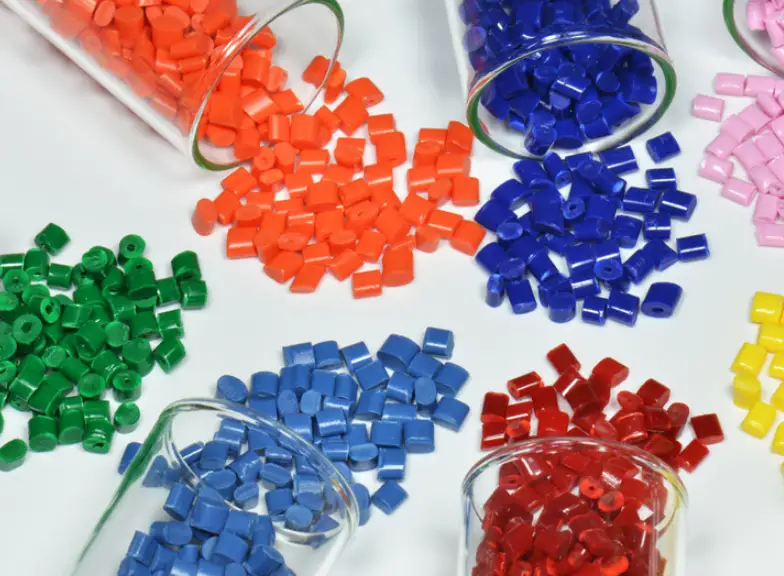
Materials Used for Insert Molding
The insert molding process can accommodate a wide variety of plastics, and material selection depends on the desired mechanical properties, thermal stability, and overall performance requirements of the part. When injecting molten plastic into a mold, engineers must carefully choose compatible plastics and inserts to ensure strong adhesion and durability, particularly in high production volume runs.
Common Thermoplastics include:
ABS: excellent toughness and impact resistance
Nylon (PA6, PA66): high strength and wear resistance
Polycarbonate (PC): clarity with high impact strength
PBT: dimensional stability and electrical insulation
POM: low friction and superior mechanical properties
TPU: flexible with soft-touch surfaces
PEEK: high-temperature and chemical resistance
PP: lightweight and cost-effective
Compatible Inserts can be metal or other components and often include inserts such as:
Steel, brass, aluminum, or copper
Ceramic or pre-molded plastic parts
Magnets and electronic components
Examples of insert applications include automotive connectors, consumer electronics housings, medical devices, and industrial components. By combining the right plastic with inserts, manufacturers can produce robust plastic-metal components while optimizing production time and ensuring reliable performance across diverse applications, including both high-volume and custom production runs.
Insert Molding vs. Overmolding
Although similar in concept, the two processes have distinct differences:
Insert Molding
Insert molding is often used to embed metal parts, electronics, or other components directly into the mold before injecting molten plastic.
Requires only one injection process or cycle.
Ideal for creating composite molded parts with high strength and durability.
Efficient for production runs of thousands of parts.
Focuses on structural reinforcement, integrated fastening, and precise insert molding design.
Overmolding
Involves a two-shot process or double injection molding, molding a second layer of plastic over an existing substrate.
Requires two injection cycles (also known as two-shot injection molding).
Overmolding is often applied for ergonomic, aesthetic, or functional features, such as soft-touch grips, seals, or multi-color parts.
Produces high-quality overmolded parts with excellent surface finish.
Focuses on overmolding engineering, optimizing adhesion, flow, and appearance rather than structural reinforcement.
Summary
Insert molding vs overmolding highlights the trade-off between strength and aesthetics. Insert molding is used when durability and precision matter, while overmolding emphasizes design flexibility and user experience. Choosing the right process ensures optimal performance, whether producing injection molding with inserts for industrial, automotive, or consumer applications.

Have insert molding plastic part project ?
Our expert team specializes in insert molding projects, delivering precision, durability, and consistent quality. Let us help you transform your design into reliable, custom insert molding components that meet your exact specifications
Tooling Design for Insert Molding
Tooling is one of the most critical factors for successful insert molding, directly impacting part quality, consistency, and production efficiency. Proper tooling design ensures strong plastic bonding to metal, accurate placement of threaded inserts, and reliable reinforced molded components.
Key Tooling Considerations
1. Insert Positioning Features
Accurate placement of metal and plastic inserts is essential for consistent parts. Mold cavity features such as locators, recesses, or magnetic cores help position heat-staked inserts, cold inserts, or ultrasonically installed inserts precisely, reducing misalignment and improving assembly reliability.
2. Gate Location
The gate determines how thermoplastic resin flows around the inserts, affecting bond strength, surface finish, and cosmetic quality. Proper gate placement ensures complete encapsulation of molded-in threads, molded connectors, or molded housings. High-volume production often benefits from hot-runner systems to reduce cycle time.
3. Venting
Strategically placed vents prevent air traps and burning, especially near inserts that obstruct flow. Proper venting ensures reinforced molded components and complex molded structural components form without voids or weak spots.
4. Cooling System
A well-designed cooling system reduces cycle time, minimizes warpage, and controls differential shrinkage. Cooling channels should optimize heat removal without compromising insert integrity or part geometry.
5. Mold Material
Hardened tool steel is recommended for long-term durability, particularly when molding abrasive or high-temperature plastics such as glass-filled nylon or PEEK. The material must withstand repeated injection of thermoplastic resin while maintaining precise plastic component assembly and overmolded features.
Proper tooling design is essential to produce consistent, high-quality insert molded parts that meet performance and aesthetic standards, whether for molded housings, molded connectors, or structural components requiring plastic bonding to metal.

Design Guidelines for Insert Molded Parts
Effective design is critical for ensuring that parts made using insert molding are reliable, high-quality, and cost-efficient. This complete guide outlines essential design considerations for product designers working with multiple materials and complex geometries.
1. Choose Insert Geometry Carefully
Select inserts with simple, smooth shapes to facilitate the proper flow of molten plastic. Avoid sharp edges or overly complex features that could trap air, cause voids, or interfere with the simple process of encapsulating components.
2. Add Anchoring Features
Incorporate undercuts, grooves, or knurls to improve mechanical interlock. These features help maintain alignment during the injection process and ensure strong bonds between metal and plastic, enhancing the benefits of overmolding in hybrid components.
3. Maintain Proper Wall Thickness
Uniform wall thickness prevents sink marks, warping, and uneven flow. This guideline ensures the process produces consistent, high-quality parts made across a high number of parts production runs.
4. Avoid Floating Inserts
Ensure inserts are securely positioned so they cannot shift during the injection process. Proper insert placement is essential whether using a two-step process or single-cycle insert molding.
5. Consider Thermal Expansion
Metal inserts and plastic expand differently; product designers must account for this mismatch to avoid internal stresses or part distortion.
6. Use Ribs and Bosses for Reinforcement
Incorporate structural ribs and bosses to increase strength while minimizing material usage. This also helps maintain dimensional accuracy and ensures that overmolding offers additional performance advantages when combining multiple materials in a two-step process.
Following these design considerations allows manufacturers to maximize efficiency, improve part durability, and fully leverage the benefits of overmolding and insert molding in high-performance applications.
Insert Molding Applications Across Industries
The insert molding process works by embedding metal or pre-formed components directly into molten plastic, producing durable, high-precision parts. This method is ideal for thousands of identical parts in high-volume production processes, creating hybrid molded parts that combine strength, reliability, and compact design.
1. Automotive Industry
Applications include electrical connectors, sensor housings, pedal components, switch assemblies, and brake or fuel system parts. Using thermoplastic resin to create reinforced high-performance molded parts, insert molding reduces assembly time and improves durability under vibration and temperature extremes.
2. Consumer Electronics
Insert molding enables precise integration of metal and plastic components, such as USB connectors, power adapters, smartphone parts, and wearable device housings. Techniques like automated insert placement and vertical injection molding ensure consistent quality for miniaturized components.
3. Medical Devices
Surgical tools, needle hubs, device housings, and sensor assemblies often rely on tight-tolerance molding with engineering-grade plastics. Insert positioning fixtures and precision alignment inserts are essential for high-precision, cleanroom-compliant production.
4. Industrial Machinery
Components such as gears, pulleys with metal cores, electrical housings, mechanical joints, and switch actuators benefit from manufacturing inserts that enhance wear resistance and long-term reliability.
5. Aerospace and Defense
Lightweight structural parts, sensor and connector systems, and metal-reinforced components leverage two-shot molding comparison techniques to reduce weight while maintaining strength.
6. Appliances
Motor parts, handles, knobs, and electrical components use molding automation systems to efficiently produce hybrid molded parts that extend product lifespan and improve safety.
Across industries, insert molding provides a reliable method for producing high-performance molded parts with integrated metal and plastic, optimizing both functionality and manufacturability.

Overcoming Common Insert Molding Defects
While insert molding, whether for medical device insert molding, automotive insert molding, consumer electronics molding, or aerospace molded components, offers many advantages, defects can occur if proper design and processing guidelines are not followed. Understanding common issues and solutions ensures consistent, high-quality parts.
1. Insert Shifting
Shifting is often caused by inadequate tooling design for inserts, poor metal-to-plastic bonding, or excessive injection pressure. Custom insert design and multi-cavity insert molds with precise insert retention strength help maintain alignment. Automated systems or robotic insert placement further improve accuracy and reduce variability.
2. Voids or Air Pockets
Trapped air can form voids around inserts, compromising structural integrity. Adjusting injection speed, improving venting, and ensuring proper mold venting channels during thermoplastic molding reduce air entrapment. This is especially important for plastic or rubber material components in delicate applications like medical device insert molding.
3. Weak Bonding
Poor bonding often results from cold inserts or low melt temperatures. Pre-heating inserts and optimizing thermoplastic molding parameters improve metal-to-plastic bonding. Strong adhesion is crucial in automotive insert molding and aerospace molded components, where structural reliability is critical.
4. Flash Around Inserts
Excess material escaping around the insert can produce flash. Tight tolerances, proper mold fit, and accurate insert retention strength reduce this issue, particularly in consumer electronics molding, where aesthetics matter.
5. Sink Marks
Large metal inserts can cause localized shrinkage or sink marks. Optimizing cooling channels, adjusting packing pressure, and carefully balancing wall thickness prevent this defect in plastic parts used to create high-performance assemblies.
When insert molding is used to create plastic components like overmolding, following these guidelines ensures high-quality multi-cavity insert molds that outperform other manufacturing methods in strength, precision, and consistency.

Cost Analysis: Is Insert Molding Worth It?
While tooling costs are higher due to complex mold design, insert molding often reduces overall production expenses through:
Fewer assembly steps – embedding components during molding eliminates the need for screws, adhesives, or secondary assembly.
Shorter manufacturing cycles – combining multiple materials in one operation speeds up molded parts manufacturing.
Reduced labor – automated insert placement and precise mold design minimize operator involvement.
Improved product reliability – strong metal-to-plastic bonds create enhanced durability parts that withstand wear, vibration, and stress.
Long-term sustainability – durable, integrated components reduce replacements and maintenance costs.
Applications where insert molding proves cost-effective include molded plastic enclosures, ergonomic molded components, and high-strength industrial parts. The process also supports custom molded solutions, allowing designers to combine metal and plastic in one step for high-performance, precision components.
For high-volume production or parts requiring metal reinforcement, insert molding delivers superior efficiency, consistent quality, and reduced lifecycle costs, making it a smart investment compared to other manufacturing methods.
Insert Molding and Automation
Modern insert molding increasingly incorporates automation to improve efficiency, precision, and safety. Key automated systems include:
Robotic arms for accurate insert placement
Automated optical inspection for quality assurance
Smart material handling for consistent workflow
Fully automated insert feeding systems for high-volume production
Automation is especially valuable for structural plastic parts, insert-molded connectors, and electronics overmolding, where complex molded geometries and tight tolerances are critical. By reducing human error, automation improves speed, accuracy, and repeatability across production runs.
These systems also enhance molded product development, enabling designers to create intricate shapes and multi-material assemblies without compromising quality. Manufacturers can efficiently scale from prototyping to full production while maintaining consistent performance.
Industries such as automotive, consumer electronics, and medical devices rely on production molding services with automation to produce reliable, high-performance parts. Using robotics and smart material handling ensures that insert-molded connectors, structural plastic parts, and electronics overmolding components meet both functional and aesthetic requirements.


Prototype Insert Molding
For early-stage development, engineers use prototype insert molding to test designs quickly and cost-effectively. Common methods include:
Rapid tooling for fast mold fabrication
Aluminum molds for low-volume validation
Soft steel molds for short-term durability
3D-printed inserts for flexible geometry testing
This approach allows the process to repeat multiple times, enabling fast design iterations while keeping costs low. The process reduces the risk of defects and ensures that parts per prototype accurately represent final molded parts.
A reference guide or practical guide on how to make prototype insert-molded components helps engineers streamline testing, optimize insert molding design, and troubleshoot issues before committing to full-scale production.
Using prototype insert molding, teams can validate metal-to-plastic bonding, test insert alignment, and verify functional and aesthetic performance. This method accelerates development and improves confidence in high-volume production molding services for molded product development.
FAQs About Insert Molding
What is insert molding?
Insert molding is a specialized injection molding process where metal or pre-formed components are placed in a mold cavity before molten plastic is injected, creating a single integrated part.What types of inserts can be used?
Common inserts include threaded metal inserts, bushings, bearings, pins, sensors, magnets, and pre-molded plastic components.What materials are suitable for insert molding?
Thermoplastics like ABS, Nylon (PA6/PA66), Polycarbonate (PC), PBT, POM, TPU, PEEK, and PP are widely used, depending on mechanical properties and application requirements.How does insert molding differ from overmolding?
Insert molding embeds solid components in a single cycle, whereas overmolding covers a substrate with a second layer of plastic, often using a two-shot process.What industries use insert molding?
Applications include automotive, consumer electronics, medical devices, industrial machinery, aerospace, and appliances.What are common defects in insert molding?
Defects include insert shifting, air pockets, weak bonding, flash, and sink marks. Proper design, venting, and pre-heating inserts reduce these issues.What are the advantages of insert molding?
Advantages include stronger parts, reduced assembly steps, improved reliability, lightweighting, and enhanced design flexibility.Can insert molding be automated?
Yes, robotic arms, automated insert feeding, and molding automation systems improve speed, accuracy, and repeatability.What is the typical cycle time for insert molding?
Cycle time depends on part size, plastic material, insert type, and mold complexity. Efficient cooling systems help reduce production time.Is insert molding cost-effective?
For high-volume production and parts with metal reinforcement, insert molding reduces labor, assembly steps, and overall cost, despite higher tooling expenses.What is prototype insert molding?
Used in early-stage development, it involves rapid tooling, aluminum molds, or 3D-printed inserts to validate designs before full-scale production.How do I ensure insert retention strength?
Design anchoring features like knurls, undercuts, or grooves, and optimize plastic flow to maximize metal-to-plastic bonding.
Conclusion
Insert molding is a transformative manufacturing method that enables integrated component molding, combining metal and plastic in a single cycle to produce industrial molded parts with superior strength, durability, and precision. By reducing the need for secondary assembly, it supports plastic assembly reduction while maintaining high-quality performance.
Applications are wide-ranging, from automotive connectors and electronics housings to medical devices and aerospace components. Both prototype insert molding and high-volume insert molding processes allow manufacturers to validate designs efficiently, scale production, and optimize part performance.
Understanding insert molding applications, material selection, tooling design, and processing parameters is key to achieving consistent results. Designers and engineers can create complex geometries, hybrid parts, and multi-material components with minimal post-mold assembly, improving production efficiency and reducing costs.
With its versatility, reliability, and ability to combine functionality and aesthetics in a single molded part, insert molding remains a critical solution for modern manufacturing, providing a robust pathway from prototype insert molding to full-scale high-volume insert molding production.
Get A Quote For Your Insert Molding Project
Get a fast, accurate quote for your insert molding plastic parts by uploading your CAD files or drawings. Our engineers review your design, recommend suitable materials, and provide a clear cost breakdown if needed. Start your insert molding project with confidence and move quickly into production.
