
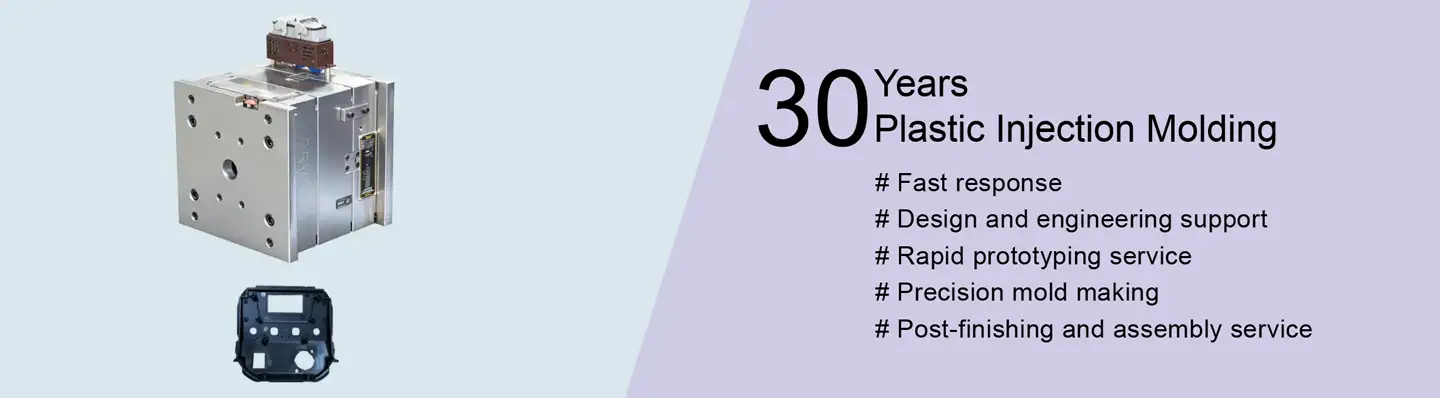
The injection molding process is one of the most versatile, scalable, and cost-efficient manufacturing methods for producing nearly any type of plastic part. Used in automotive components, medical devices, consumer electronics, packaging, home appliances, and industrial equipment, plastic injection molding allows manufacturers to create high-precision components with consistent quality and excellent repeatability.
By injecting molten plastic into a precisely engineered mold, this method enables fast and reliable production across all major industries. Modern injection mold technology has advanced rapidly. Today’s injection molding machines—from standard molding machines to fully automated systems—work with high-performance resin materials, smart tooling, improved cooling systems, and digital simulation software to optimize every step of the cycle.
These innovations make the entire injection molding process more efficient, more stable, and more cost-effective than ever before. This comprehensive guide covers every stage of plastic manufacturing, including machine operation, mold design fundamentals, material and resin selection, molten plastic flow behavior, cycle optimization, and defect prevention. It also explores real-world industrial applications and best practices for maximizing productivity.
Whether you are an engineer, product designer, or manufacturer, this detailed overview will show you how to leverage injection molding to produce high-quality plastic parts efficiently, reliably, and at scale—while getting the most out of every inject cycle.

What Is the Injection Molding Process?
The injection molding manufacturing process is used to produce injection molded parts and other molded parts in high volumes with exceptional consistency. It works by injecting molten plastic material into a precisely engineered mold cavity, where the material cools, solidifies, and takes the final shape.
With proper mold design and optimized injection mold design, the process can produce complex geometries, tight tolerances, and highly accurate dimensions across thousands or even millions of parts.
Why Injection Molding Is So Widely Used
Injection molding is preferred in many industries because it offers:
- High production efficiency
- Low cost per part at medium to high volumes
- Excellent repeatability for identical injection molded parts
- Compatibility with a wide range of plastic materials
- Ability to form complex shapes and detailed features
- Minimal waste and scrap during the manufacturing process
- Multiple surface textures and finishing options
By controlling factors such as injection pressure and injection speed, manufacturers can achieve superior precision, consistent flow behavior, and high-quality outputs. Its scalability—from small prototype runs to mass production—makes injection molding a trusted solution for startups, industrial manufacturers, and global OEMs across every major sector.
Key Components of the Injection Molding System
The Plastic injection molding process depends on three essential elements that work together to melt the material, shape it, and allow it to solidify into finished plastic products. Each component influences quality, cycle time, and overall efficiency.
The Injection Molding Machine
An injection molding machine performs the core operations of the Injection molding cycle. It manages the Plastic melting stage, the Mold filling process, and ensures the plastic resin is properly injected into the mold.

A typical machine includes:
- Injection Unit – melts the plastic and controls how the plastic is injected
- Clamping Unit – opens and closes the mold halves
- Control System – regulates mold temperature, injection speed, pressure, and heat
- Hydraulic/Electric Drive System – powers mechanical movements
Modern machines may be hydraulic, all-electric, or hybrid.
Electric machines deliver:
- Faster cycle times
- Higher precision in molding
- Lower energy consumption
Hydraulic machines remain preferred for heavy-duty, high-tonnage molding techniques where force and durability are required.
The Mold (Injection Tool)
The injection mold is the heart of the system. Once molten plastic is injected into the mold, it flows through the internal features and begins to cool and solidify.
A typical mold includes:
- Cavity and core
- Sprue, runner, and gate system
- Cooling channels for controlling mold temperature
- Ejector pins to release the part
- Venting features
- Steel or aluminum mold base
The quality of the mold surface, cooling layout, and mold design strongly affects part finish, accuracy, and cycle efficiency.
High-volume production typically uses hardened steel molds, while aluminum tools are ideal for prototypes or low-volume runs.

Plastic Material (Resin)
Injection molding supports a broad spectrum of plastic resin types, allowing precise tailoring of performance for different applications. Common categories include:
- Commodity plastics – PP, PE, PS
- Engineering plastics – ABS, PC, Nylon
- High-performance plastics – PEEK, PPS, PSU
- Elastomers – TPU, TPE
Material selection impacts mechanical strength, durability, temperature resistance, chemical behavior, and the final appearance of plastic products.

Step-by-Step Breakdown of the Injection Molding Process
The injection molding technique follows a carefully controlled sequence known as the injection molding cycle. Every stage influences part strength, surface quality, and cost efficiency when manufacturing plastic parts. Today, the injection molding process is used to produce millions of plastic components, from small consumer items to complex industrial housings.
Step 1: Material Preparation & Feeding
The process begins by loading plastic pellets into the hopper. These pellets may be blended with additives such as colorants, UV stabilizers, or glass-fiber reinforcement, depending on the injection molding project. Some materials must be dried to prevent moisture-related defects. Once fed into the barrel, the plasticizing screw begins to transport and prepare the material.
Step 2: Melting the Polymer
Inside the barrel, heaters and the barrel heating zones gradually transform pellets into melted plastic. Precise melt temperature control prevents burning or degradation. The screw rotation ensures uniform melting as the polymer moves toward the injection unit.
Step 3: Injection – Filling the Mold
During the injection process, the screw pushes forward, and molten plastic is injected into the mold cavity at controlled injection pressure settings and injection speed. Proper injection gate design, runner system, or hot/cold runner configuration ensures smooth flow. This step directly affects whether the halves of the mold fill properly without short shots or flow lines.
Step 4: Packing & Holding
Once filled, the machine maintains holding pressure to compensate for shrinkage. This stabilizes the molded part, preventing voids and sink marks while improving dimensional accuracy. The clamp force of the injection molding machine keeps the mold tightly closed during this stage.
Step 5: Cooling Phase
The cooling phase is often the longest stage. The mold’s thermal design, mold temperature control, and internal cooling channels determine cycle time and part stability. Efficient cooling reduces warpage, shrinkage, and overall production costs. Whether it’s a single-cavity tool or a multi-cavity mold, this step is critical to consistent quality.
Step 6: Mold Opening & Ejection
After solidification, the mold opens and the ejection mechanism—such as ejector pins or air blasts—removes the finished part. A clean release is essential to avoid damage to delicate features, especially in complex parts used to produce plastic housings or functional assemblies.
Step 7: Trimming & Post-Processing
Secondary processes may include deflashing, CNC trimming, pad printing, laser marking, or assembly. For prototypes, some teams compare molded parts with 3D printed versions before moving to full-scale types of injection molding production. Whether using a hot runner system or cold runner molding, the process consistently delivers high-quality, repeatable components.

Mold Design and Its Impact on the Injection Molding Process
Mold design has a major impact on cycle time, production cost, part quality, tooling precision, and long-term durability. Because injection molding process is a complex manufacturing system, proper mold engineering ensures stable material flow, efficient cooling, and reliable ejection throughout the entire production process.
Key Considerations in Mold Design
When creating a mold for modern molding applications, engineers must evaluate several critical factors:
- Number of cavities (single vs multi-cavity), which affects throughput and tooling complexity.
- Gate types such as edge, hot tip, or valve gate influence polymer melt flow, material viscosity, and how efficiently the polymer enters the mold cavity.
- Part geometry and required draft angles for smooth release.
- Ejection system design to ensure consistent part removal during mold opening.
- Cooling channel optimization to enhance cycle time optimization and reduce warpage.
- Venting to prevent trapped gases and incomplete filling.
- Packing and holding pressure strategies to manage dimensional accuracy and shrinkage control.
Modern tools often incorporate mold flow analysis to predict material behavior and refine mold features in advance. Proper plastic resin drying also ensures stable flow and reduces moisture-related defects.

Mold Materials
| Mold Material | Cost | Durability | Best For |
|---|---|---|---|
| Aluminum | Low | Medium | Prototypes, low-volume molds |
| P20 Steel | Medium | High | Mid-volume manufacturing |
| H13 Steel | High | Very High | High-volume or tough molding applications |
| S7 / 420 Stainless Steel | High | High | Corrosive materials, medical-grade tools |
Selecting the correct mold material helps ensure long tool life, predictable flow performance, and overall efficiency across different molding environments.
Material Selection in the Injection Molding Process
Choosing the right plastic resin is a critical step in any process used in injection molding. The selected material directly affects mechanical strength, chemical resistance, heat tolerance, impact performance, and the overall appearance of the finished part. Material choice also ensures compliance with regulations such as FDA, UL, or ISO standards.
During optimizing the injection molding process for specific different parameters, including injection velocity and cooling rates, engineers must consider the flow characteristics of plastic pellets to achieve consistent filling, especially in advanced applications like thin-wall injection molding.
Common Materials Used in Injection Molding
Commodity Plastics:
- PP – lightweight and chemical-resistant
- PE – flexible, durable
- PS – rigid and cost-effective
Engineering Plastics:
- ABS – tough with a glossy finish
- PC – high impact strength
- Nylon – strong and wear-resistant
High-Performance Plastics:
- PEEK – extremely strong and heat-resistant
- PPS – stable at elevated temperatures
- PEI – widely used in injection molding process for medical, aerospace, and demanding industrial applications
Selecting the correct material ensures optimal flow in the mold cavity, minimizes defects, and allows manufacturers to tailor injection molding processes for performance, appearance, and production efficiency. Molding is the most widely used technique for producing high-volume, high-precision plastic parts across industries.
Types of Injection Molding Processes
Injection molding process is a highly adaptable process used to produce plastic parts across a wide range of industries. By carefully controlling events during the injection, manufacturers can achieve high precision, consistent quality, and minimal defects in the final plastic part.
Standard Injection Molding
The most common method, standard injection molding, involves granular plastic is fed into the machine, melted, and then the melted plastic is forced into a mold cavity. Proper tooling design, parting line design, draft angles, and venting in molds ensure efficient mold release and defect-free parts.
Scientific molding principles help manage injection pressure to fill, injection speed, and screw back pressure, reducing flow lines in molding, sink marks, and flash.
Overmolding
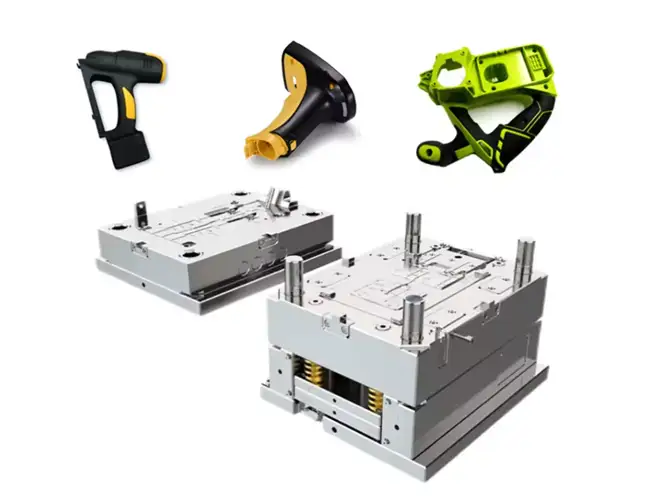
Overmolding bonds two materials in a single cycle, such as soft TPE over hard ABS for ergonomic grips or vibration-damping components. Precise mold opening force and closing during the injection timing are essential to maintain dimensional accuracy.
Insert Molding
Metal or electronic inserts are placed in the mold before injection, allowing the melted plastic to flow around and secure the insert. Proper venting in molds and warpage prevention are key to part integrity.
Gas-Assisted Injection Molding
This technique injects gas to hollow out sections of the part, reducing weight while maintaining structural strength. Controlling injection pressure and injection speed prevents defects.
Multi-Shot Injection Molding
Two or more materials are molded in one cycle, requiring precise aluminum mold tooling or steel molds (mold steel selection) to maintain alignment, mold release, and dimensional consistency.
Micro Injection Molding
For tiny, high-precision parts in medical and electronics applications. Careful screw back pressure, injection speed, and mold opening force are critical to prevent defects like flow lines, sink marks, or flash, ensuring the final plastic part meets strict tolerances.
Advantages of the Injection Molding Process
The injection molding process offers numerous benefits for manufacturing high-quality plastic parts. During molding, melt compression and fill time optimization ensure the plastic part is fully formed and dense, minimizing voids and internal stresses. Carefully managed cooling time reduction helps improve dimensional accuracy and tolerance control, while reducing overall cycle time for higher efficiency.
This part is called the injection molded component and, when properly processed, exhibits excellent surface finish in molding, consistent shapes, and tight tolerances. Followed by the injection and packing stages, the process supports complex geometries that would be difficult or impossible with other techniques.
Other advantages include:
- High repeatability for mass production
- Wide selection of polymers to meet performance requirements
- Minimal injection molding defects
- Scalability from prototypes to millions of units
Overall, the injection molding process provides a cost-effective, fast, and reliable solution for producing high-precision plastic parts across virtually all industries.
Common Defects in the Injection Molding Process and How to Prevent Them
Injection molding is a key manufacturing method capable of producing high-precision engineering-grade plastics and a wide variety of plastic components.
Whether using thermoplastic molding, thermoset injection molding, or advanced techniques such as the Overmolding technique, Insert molding process, Structural foam molding, Gas-assisted injection molding, Thin-wall injection molding, Micro injection molding, High-pressure molding, or Low-pressure molding, common defects can still arise. Understanding the causes and solutions ensures high-quality output.
Warpage
Warpage occurs when uneven cooling or differential shrinkage causes the cavity of the mold to distort.
Solution: balance cooling channels, ensure uniform wall thickness, and optimize injection molding process parameters.

Sink Marks
Sink marks appear in thick sections of parts.
Solution: Apply appropriate holding pressure during the injection of the polymer and reduce wall thickness.
Flash
Excess material along the edges results from mold wear or insufficient clamp force.
Solution: Maintain molding equipment and repair worn molds.
Short Shots
Incomplete filling of the cavity of the mold leads to missing sections.
Solution: increase injection pressure, optimize gate design, and carefully select resin for proper flow.
Burn Marks
Trapped gases can char the surface.
Solution: improve venting, reduce injection speed, and monitor injection molding parameters.
Flow Lines
Visible streaks are caused by inconsistent flow during the injection molding process.
Solution: adjust melt temperature, optimize injection speed, and refine gate location.
By combining proper resin selection, well-maintained molding equipment, and optimized injection molding parameters, manufacturers can minimize defects in both standard and specialized processes.
Modern production often integrates 3D printing and injection molding for prototyping and testing, ensuring that injection molding can be used efficiently for both prototypes and high-volume molding systems.
Cycle Optimization for Cost and Efficiency
Optimizing the process for producing high-quality molded parts is essential, as cycle time directly affects production cost, efficiency, and throughput.
Strategies for Faster Cycle Time
- Improved mold cooling channels to accelerate the cooling phase.
- Gate location optimization and careful sprue and runner design for uniform filling.
- High-speed electric molding machines or hot runner systems for faster, consistent production.
- Proper plastic part design, including uniform wall thickness and draft angles, to support efficient cooling and enhance molded part quality.
Reducing Waste
- Controlled use of regrind to minimize scrap.
- Precise handling of injection molding resins with proper drying methods to prevent defects like bubbles or splay.
- Routine mold maintenance to ensure the molding tool is opened and closed smoothly, reducing flash and maintaining dimensional accuracy.
Energy Efficiency
- Modern electric molding equipment reduces energy consumption by up to 70% compared to traditional hydraulic machines.
- Optimized process and parameters maintain high production rates while minimizing energy costs.
- Efficient cycles combined with thoughtful plastic part design and tooling support cost-effective and sustainable production.
By integrating these strategies, manufacturers can achieve a process suitable for injection molding that balances speed, cost, energy efficiency, and consistent molded part quality.

Applications of the Injection Molding Process Across Industries
Injection molding enables precise, high-volume production of plastic components, serving industries from automotive to medical, consumer electronics, industrial parts, and packaging, while supporting efficiency, sustainability, and consistent quality.
Automotive
- Dashboards, clips, connectors, sensor housings
- Machine calibration and the clamping force that the machine applies ensure precision
- Plastic solidifies quickly, and once the plastic has cooled, the parts are ready for assembly
- Process optimization improves efficiency and injection molding productivity
Medical
- Syringes, diagnostic equipment, and sterilizable components
- Automated molding systems enable high throughput and consistent quality
- Real-time process monitoring maintains tight tolerances and safety standards
- Use of recycled plastic is possible for eco-friendly solutions
Consumer Electronics
- Phone cases, keyboards, plastic housings
- Ensures durability and precise dimensions for high-volume production
Industrial Components
- Gears, valves, enclosures
- Advanced injection molding allows optimized cycle times and reduced waste
Packaging
- Bottle caps, containers, food-contact parts
- High-speed production with process optimization ensures cost-effective output
- Supports recycled plastic use while maintaining quality
By leveraging these techniques, industries achieve reliable, high-quality plastic components efficiently, meeting both performance and sustainability goals.

The Future of the Injection Molding Process
The injection molding industry continues to evolve, driven by innovations that enhance efficiency, quality, and sustainability across injection molding applications.
Smart & Digital Injection Molding
- Real-time monitoring and AI-driven parameter adjustments optimize molding conditions, ensuring every cycle produces quality plastic components.
- Predictive maintenance reduces downtime, minimizing disruptions during injection cycles and maintaining consistent output.
Additive Manufacturing Integration
- 3D printed molds accelerate prototyping, allowing designers to test and refine products before full-scale production.
- Using raw plastic efficiently in these prototypes reduces waste and shortens development timelines.
Sustainable Manufacturing
- Adoption of biodegradable plastics and material recycling supports eco-friendly production.
- Energy-efficient machines lower environmental impact while maintaining productivity.
Automation & Robotics
- Automated part handling, quality inspection, and packing streamline operations, reducing human error.
- Robotics integration ensures high precision, even under complex molding conditions, and improves throughput across multiple injection molding applications.
These trends position injection molding as a flexible, high-quality, and sustainable solution for the future, meeting growing industrial demands while optimizing both performance and resource efficiency.
Conclusion
The injection molding process remains the backbone of modern plastics manufacturing, delivering unmatched speed, precision, and efficiency. During production, plastic fills the cavity smoothly and is forced into the mold, ensuring components are ready for injection and consistently shaped.
By mastering mold design, material selection, machine technology, and cycle optimization, manufacturers can address common molding problems and produce durable, high-quality plastic parts across diverse applications.
Although most injection molding tasks are covered by the conventional process, modern advancements in automation, smart controls, and digital simulations enhance performance and reduce defects. From rapid prototyping to low-volume production and large-scale manufacturing, injection molding offers the scalability, reliability, and efficiency today’s industries demand.
By integrating sustainable materials and optimized techniques, the process continues to evolve, maintaining its role as a cornerstone of manufacturing for decades to come. Its ability to reliably produce precise parts while solving molding problems ensures that injection molding will remain an essential technology for the future.